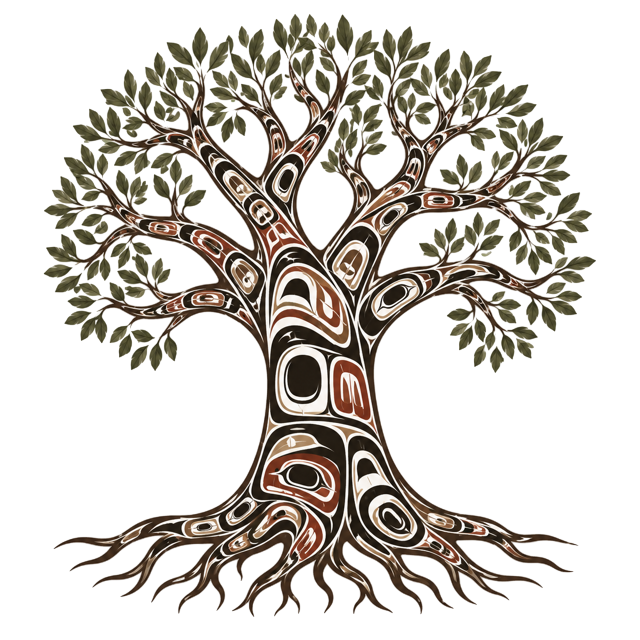

One question. Seven pillars.
Is this place actually equipped to raise an Indigenous child? The IFISC standard answers that question with measurable criteria, community verification, and public accountability.
The gap this standard fills
No Indigenous-led certification program for child welfare providers exists anywhere in Canada. There is no publicly accessible Indigenous-authored standard that tells a foster care agency, group home, or residential care facility what they must do to be considered safe and appropriate for an Indigenous child. There is no public rating system families and advocates can reference.
IFISC changes that. Where current frameworks measure compliance with state-defined safety, IFISC measures alignment with Indigenous family integrity. Where current systems sever family to protect children, IFISC sets a standard for protecting children within family.
What gets certified?
Certification is open to nations, family service providers, agencies, and organizations whose work touches Indigenous families. The certification process measures practice across all seven pillars, with documented evidence and community accountability.
Certification is not a one-time event. It is a renewable standing that requires ongoing evidence of practice, community feedback, and alignment with nation-specific law. Read the certification process.
What are the seven pillars?
- Health and Wellness. Physical, mental, and spiritual health frameworks rooted in Indigenous knowledge.
- Rights and Legal Accountability. Recognition of family rights, due process, and legal recourse within and beyond colonial systems.
- Indigenous Law and Tradition. Customary law, ceremony, and nation-specific governance integrated into family safety planning.
- Family and Reunification. Concrete pathways to keep families together and to bring them home.
- Culture and Identity. Continuity of language, ceremony, kinship, and belonging across generations.
- Community and Accountability. Transparent oversight and shared responsibility within and across nations.
- Crisis Intervention. Protocols that protect children without severing family.
Each pillar is described in depth on the 7 Pillars page.
Who built the standard?
IFISC was developed by KFT-Families Society in collaboration with Indigenous families, advocates, elders, legal practitioners, and community members across multiple nations. The Society is Indigenous-led, governed by a board of community leaders and allies. Meet the team.
Standard FAQ
Common questions about the standard.
What does the IFISC standard measure?
IFISC measures organizational practice across seven pillars: Health and Wellness, Rights and Legal Accountability, Indigenous Law and Tradition, Family and Reunification, Culture and Identity, Community and Accountability, and Crisis Intervention. Each pillar is broken down into documented criteria.
Is IFISC a government program?
No. IFISC is a program of KFT-Families Society, a British Columbia nonprofit society (federal charitable registration in progress). The standard is independent of provincial child welfare authorities, though it is designed to inform and improve their practice.
Can the standard be adapted to specific nations?
Yes. The standard names what must be present, not how it must look. Nation-specific law, language, ceremony, and protocol shape how each pillar is implemented in practice.